Conducting a GRE Mock Test: Dry Runs & Realistic Test-Day Simulations
5 min read
Dec 15, 2025
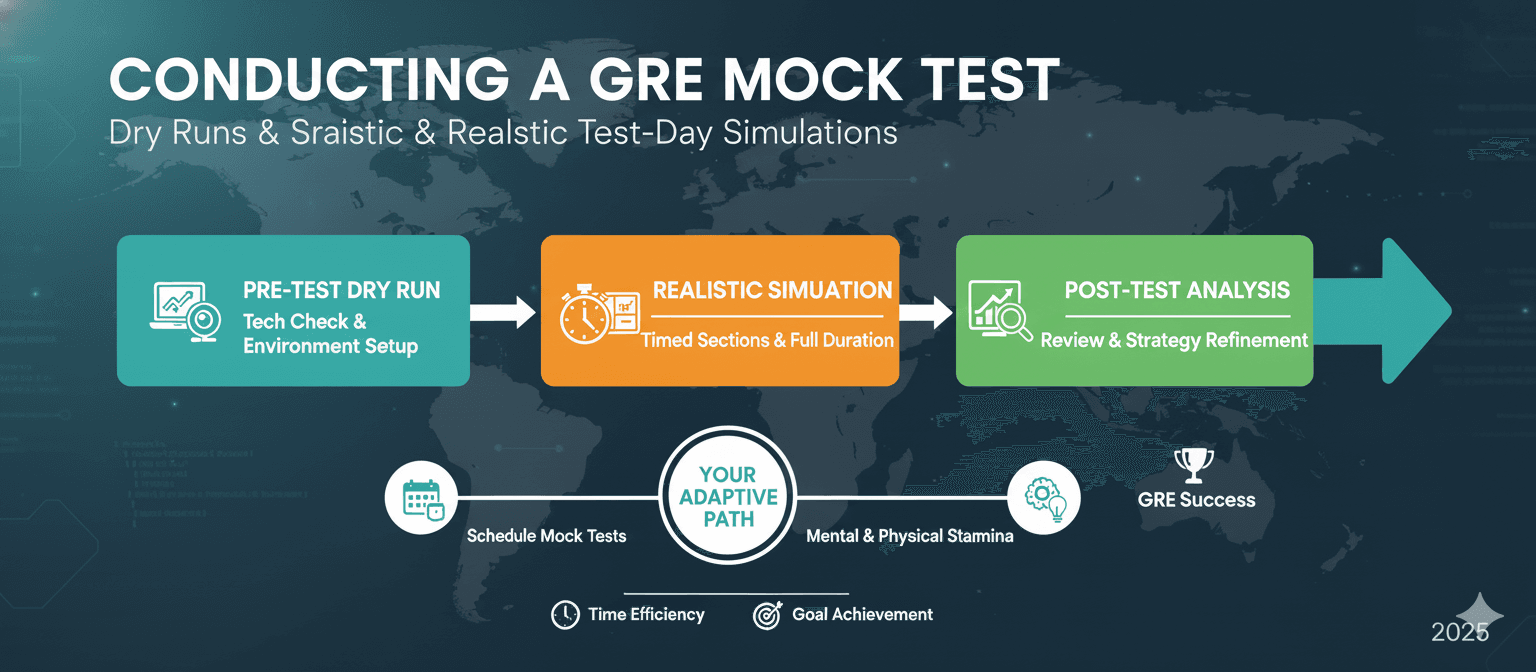
Taking a GRE mock test isn't just about practicing questions—it's about training your brain to perform under real exam conditions. While most test-takers understand that practice tests are important, few approach them strategically enough to unlock their full benefit.
Here's what cognitive science reveals: the act of retrieving information under timed, test-like conditions strengthens memory pathways more effectively than passive studying. Researchers call this the "testing effect," and it means that a well-conducted mock test isn't just assessment—it's one of the most powerful learning tools available.
The updated GRE format, now just 1 hour and 58 minutes, makes proper simulation even more critical. The condensed structure demands sharper focus and faster adaptation to the section-adaptive format. Let's explore how to make every mock test count.
Why Mock Tests Outperform Regular Practice
Standard GRE practice—working through question sets at your own pace—builds content knowledge. Mock tests build something different: test-taking stamina and automaticity. Research from cognitive psychology demonstrates that retrieval practice (actively recalling information under testing conditions) produces significantly better long-term retention than repeated studying of the same material.
When you simulate actual exam conditions, your brain learns to:
- Perform under time pressure without panicking
- Manage cognitive load across multiple question types
- Recognize patterns in how sections adapt based on your performance
- Reduce anxiety through familiarity with the testing experience
This desensitization effect is particularly valuable. Studies show that practicing test situations can counteract anxiety-induced performance decrements, especially in tasks requiring working memory, exactly what the GRE demands.
The Anatomy of an Effective GRE Dry Run
A productive mock test requires more than sitting down with practice questions. Here's a systematic protocol:
Pre-Test Setup (15 minutes before)
Recreate the physical and mental conditions of test day. Find a quiet space, silence your phone, and clear your desk except for scratch paper and the approved calculator. Eat a light meal beforehand—the same timing you'd use on exam day.
Section Timing (Match the Real Exam)
The current GRE structure is tight. Your mock should mirror it exactly:
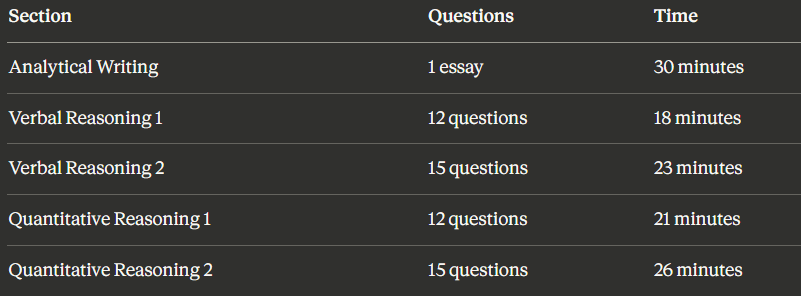
Total time: 1 hour 58 minutes—no scheduled breaks in the shorter format, though you can take an optional 10-minute break after the Analytical Writing section.
The Section-Adaptive Factor
Here's something most practice routines miss: the GRE adapts difficulty between sections. Your performance on Verbal Reasoning 1 determines whether Verbal Reasoning 2 is harder or easier same for Quant. Strong performance on the first section unlocks a harder second section, which offers access to higher scores.
During mock tests, pay attention to how you perform when difficulty suddenly increases. This mirrors the real test's behavior and helps you develop resilience when facing challenging question sets.
Creating Realistic Test Conditions
Environment Matters
Your mock test environment should create mild productive stress—not comfort. Test centers aren't quiet coffee shops. They have fluorescent lighting, other test-takers, and ambient noise. Consider using low background white noise during practice to build tolerance.
Digital Familiarity
Use computer-based practice tests exclusively. The GRE's on-screen calculator, navigation features, and mark-for-review function all require practice. ETS offers free POWERPREP Online tests that replicate the exact interface—these are your most valuable resources.
Post-Test Protocol
Here's where most test-takers waste their mock test investment: they check their score and stop. Instead, implement a structured review:
- Categorize every missed question by topic and question type
- Identify time management patterns—where did you rush or linger?
- Note emotional responses—which sections triggered frustration or confidence drops?
- Create targeted practice plans addressing specific weaknesses
This analysis transforms a single mock test into actionable intelligence for your remaining prep time.
Timing Your Mock Tests Strategically
Not all mock tests serve the same purpose. Schedule them intentionally:
Diagnostic Mock (Week 1 of prep): Establish your baseline score and identify major content gaps. Don't stress about the score—it's data collection.
Progress Mocks (Every 2-3 weeks): Track improvement and refine strategies. These should happen after you've studied specific content areas.
Simulation Mocks (Final 2 weeks): Full dress rehearsals under exact test conditions, including waking up at the same time you would for your actual exam. Save ETS PowerPrep tests for this phase—they're the most realistic.
Common Mock Test Mistakes
Taking too many, too fast. Quality trumps quantity. Three well-analyzed mock tests beat ten rushed ones. Your question bank is finite—don't exhaust it before you've learned from each attempt.
Pausing or extending time. Every pause breaks the simulation and undermines conditioning. If you need a break, you're simulating the wrong thing.
Ignoring the essay. The Analytical Writing section comes first and sets your mental state for the entire exam. Practice writing under the 30-minute constraint every time.
Skipping review. A mock test without analysis is just practice, not preparation. The learning happens in the review process.
Building Test-Day Confidence
Perhaps the most valuable outcome of proper mock testing is psychological: you've already taken this exam multiple times. The format holds no surprises. The timing pressure is familiar. Your brain recognizes the experience and responds with competence rather than panic.
This familiarity compounds with each well-executed simulation. By test day, you're not hoping you'll perform well—you have data proving you can.
The GRE measures reasoning ability, but your score also reflects how well you've prepared your mind to demonstrate that ability under standardized conditions. Mock tests are the bridge between knowing the material and performing when it counts.
FAQs
How many GRE mock tests should I take?
Most successful test-takers complete 4-6 full-length mock tests over their preparation period. Focus on thorough analysis after each one rather than maximizing volume.
When should I take my first GRE practice test?
Take a diagnostic mock test within your first week of preparation to establish a baseline score and identify content gaps. This informs your entire study plan.
Are free GRE practice tests accurate?
ETS POWERPREP Online tests are highly accurate since they're from the test maker. Third-party tests vary in quality—prioritize official materials for final simulations.
Should I simulate test-day morning routine?
Yes, especially for your final 1-2 mock tests. Wake at the same time, eat the same breakfast, and arrive at your desk when you'd arrive at the test center. This conditions your body's performance rhythm.
What if my mock test scores aren't improving?
Flat scores usually indicate insufficient review between tests. Slow down, analyze missed questions more deeply, and address specific content weaknesses before taking another full mock.
Written By

Suggested Posts

The Accuracy Trap: Why the Shorter GRE Punishes Old Study Habits — and How to Rewire Your Prep Strategy
Mar 31, 2026

GRE Score Validity & Sending Scores 2026: When Scores Expire, ScoreSelect Strategy & Smart Reporting
Mar 18, 2026

GRE for Indian Students 2026: Complete Guide to Eligibility, Fees, Preparation Tips & Common Mistakes
Mar 18, 2026

Designing Your GRE Study Plan: From Target Scores to Tracking Progress
Mar 13, 2026

GRE Syllabus 2026: All Topics & Question Types Demystified
Mar 13, 2026

GRE Costs & Policies: Exam Fees, Retakes & Score Reporting Explained
Mar 13, 2026

GRE Quantitative Reasoning 2026: The Complete Strategy Guide
Mar 13, 2026

GRE Analytical Writing 2026: Complete Guide, Templates & Scoring
Mar 13, 2026

GRE Scores for Top Universities 2026
Mar 13, 2026

GRE At Home vs Test Center 2026: Complete Comparison + Which One Is Right for You (India Guide)
Mar 13, 2026